Next-Generation Smart EV Charging System with Modular Power Distribution
Next-Generation Smart EV Charging System with Modular Power Distribution
Intelligent Power Distribution for Next-Generation EV Charging Infrastructure
As electric vehicle adoption continues to grow, conventional charging infrastructure faces challenges in power distribution, simultaneous vehicle charging, energy efficiency, and operational safety.
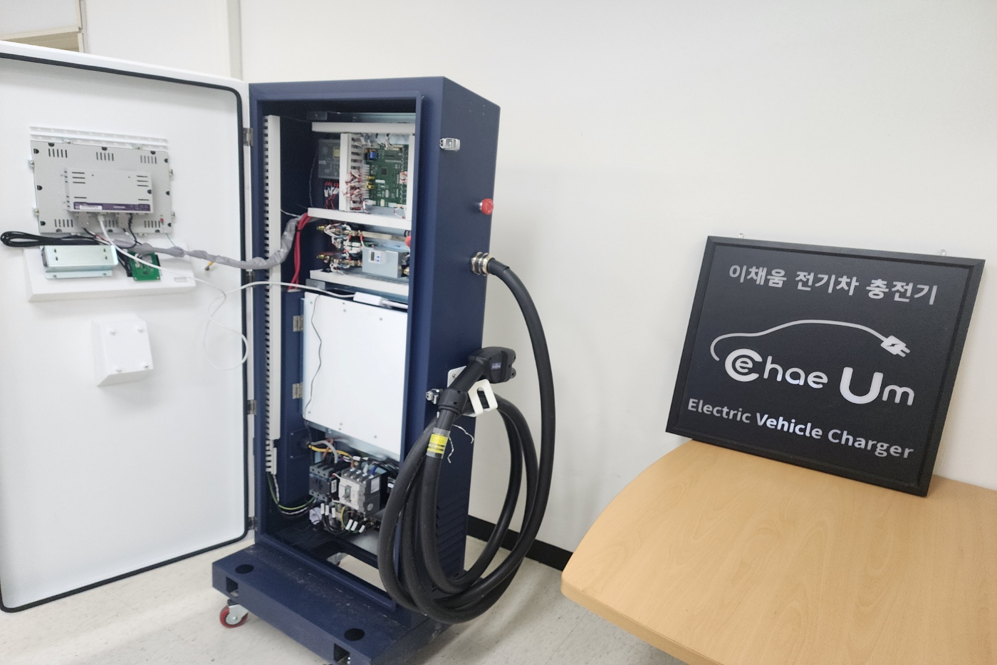
In collaboration with Blue Networks, an industry partner of Soonchunhyang University, LISA has participated in developing a next-generation modular EV fast-charging system integrating remote management, embedded firmware, and intelligent power distribution technologies.
Modular Power Architecture and Intelligent Charging Control
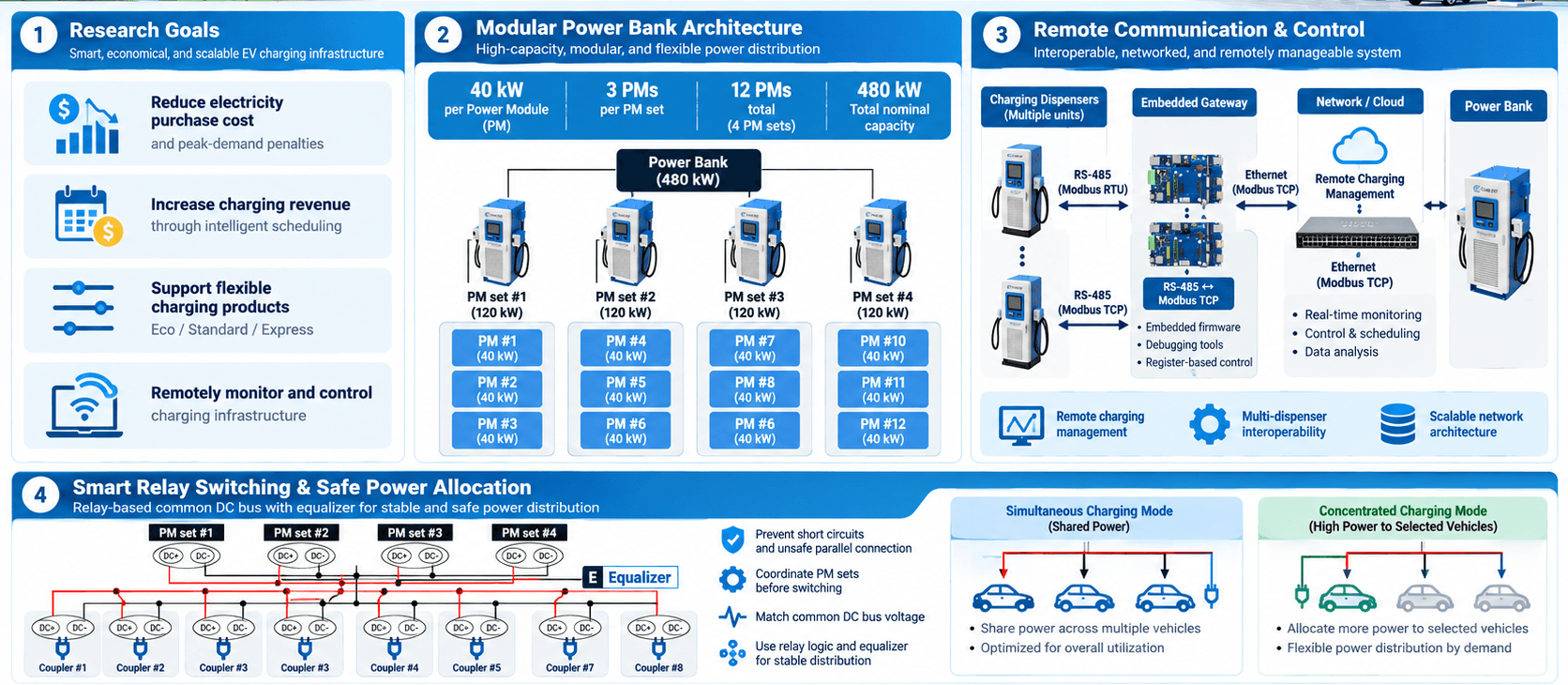
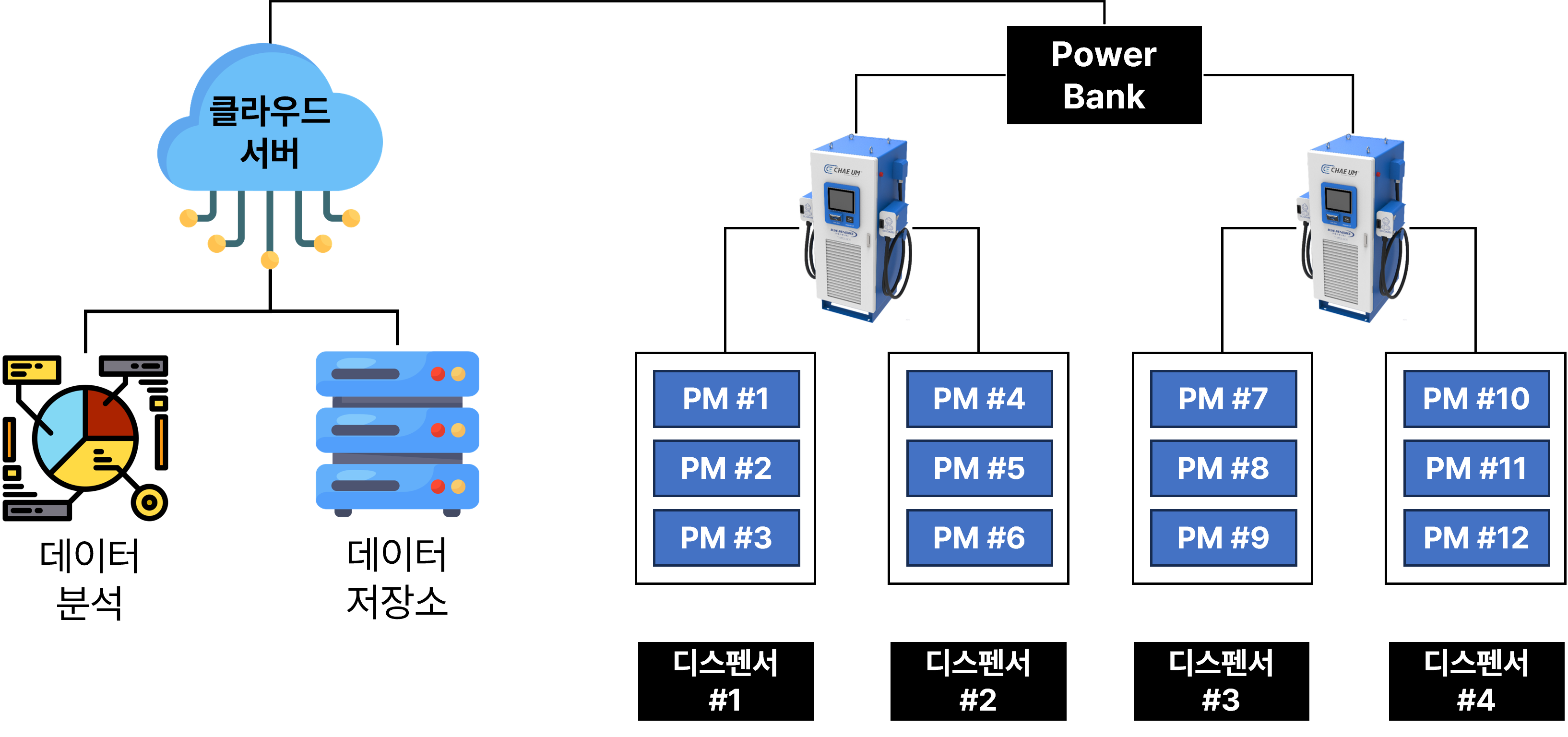
Unlike conventional charging systems with fixed power allocation, our research investigates a flexible architecture that distributes power across multiple charging dispensers using independently controllable Power Modules (PMs).
The system architecture incorporates 12 power modules rated at 40 kW each, providing a total nominal capacity of 480 kW, with configurable module groups supporting different power distribution strategies.
The research investigates two charging approaches:
Simultaneous Charging: Distributing available power among multiple connected vehicles.
Dynamic Power Allocation: Concentrating available power on selected vehicles according to charging requirements and available capacity.
A major technical challenge involves safely coordinating multiple power modules and relay switches. Our research addresses power-path isolation, coordinated switching, voltage compatibility, and short-circuit prevention, aiming to avoid unsafe electrical connections when combining or reallocating power modules.
Remote Management and Embedded Communication
LISA has also worked on embedded firmware and communication architectures enabling remote monitoring and control of EV charging infrastructure.
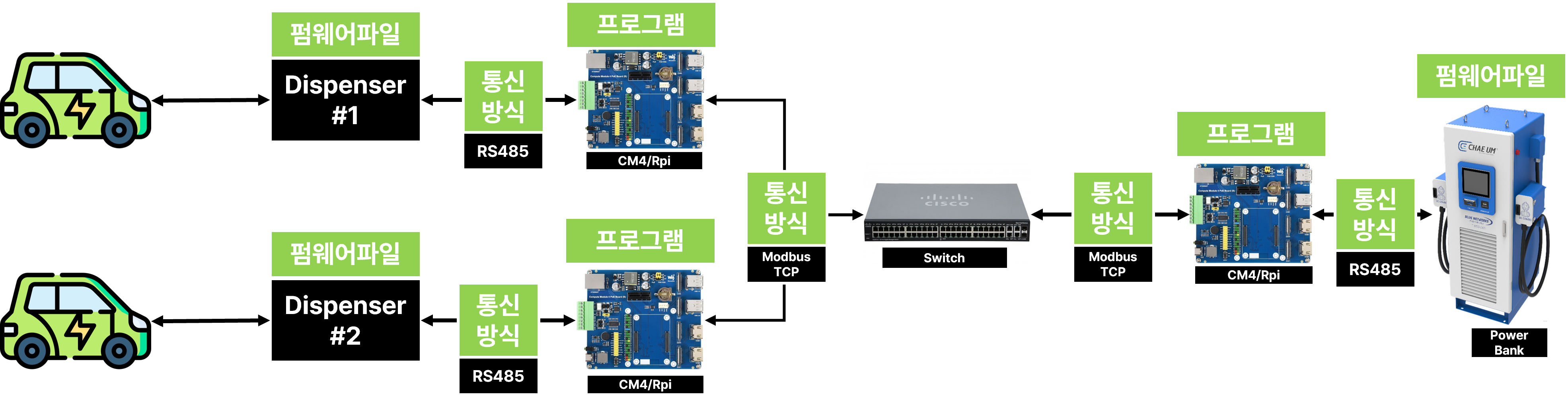
The system integrates Modbus RTU, Modbus TCP, RS-485, and Ethernet-based communication, supporting coordinated interaction between power banks, charging dispensers, and management systems.
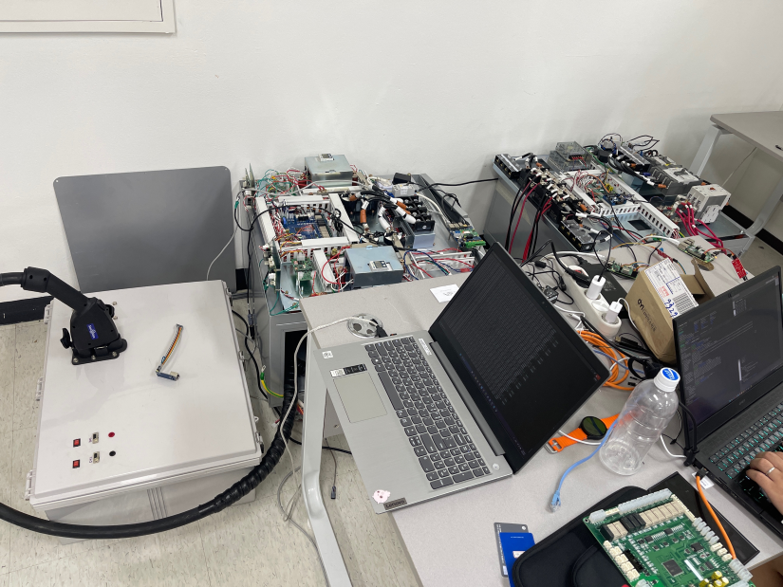
The research includes communication gateway development, firmware debugging, charging controller integration, and register-based control mechanisms for managing multiple charging channels.
Energy Efficiency and Industry Collaboration
Beyond charging hardware, the project explores intelligent power scheduling and peak-demand management to improve energy utilization and reduce electricity costs.
By analyzing charging station data and power demand patterns, the research investigates strategies for distributing available electrical capacity while maintaining charging service availability.